
project
partners

Operation Ghost Farms – Reclaiming Waters
Project Development & Impact Strategy
the case
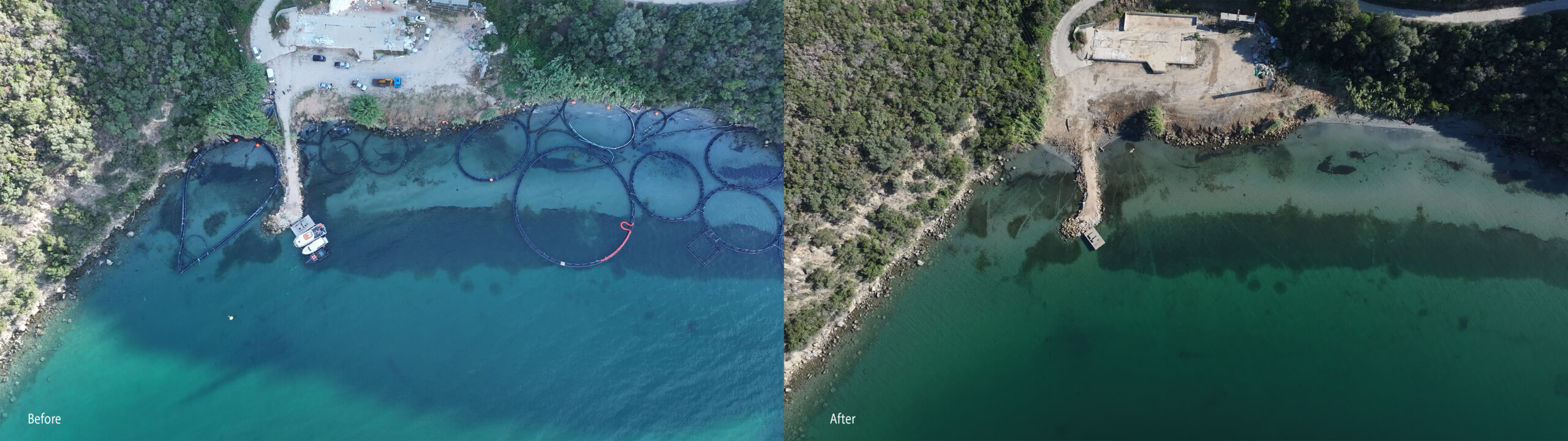
Operation Ghost Farms: Reclaiming Waters is a collaborative environmental initiative led by Healthy Seas Foundation addressing marine pollution caused by abandoned aquaculture infrastructure in Greece. Ghost farms, including abandoned cages, nets, and associated structures, continue to degrade marine ecosystems by releasing plastics, causing ghost fishing, and damaging sensitive coastal habitats.
In 2024, the initiative delivered three large-scale clean-up operations in Western Greece, removing abandoned fish farm infrastructure and marine debris while piloting circular solutions for recovered materials. Building on these outcomes, the initiative expanded in 2025 to the Saronic Gulf, extending clean-up and restoration activities to a densely populated and ecologically sensitive marine area.
Across both years, the project combined direct environmental remediation with education, ecosystem restoration, and community engagement, linking immediate clean-up actions with longer-term prevention and awareness.
PROJECT GOALS
DOTANK Plus supported the design, development, and impact strategy of Operation Ghost Farms: Reclaiming Waters.
The goal was to deliver immediate environmental restoration while strengthening long-term responsibility, prevention, and circular practices within aquaculture and coastal systems.
Through integrated clean-ups, recycling, and education, the project aimed to remove abandoned fish farms, prevent further marine pollution, demonstrate circular economy solutions for recovered materials, and build shared accountability among communities, industry actors, and future professionals.
our approach
1. Integrated Project Design and Coordination
Led the overall design and coordination of the initiative, ensuring alignment between clean-up operations, recycling processes, education activities, and communication outputs across both project phases.
2. Large-Scale Environmental Remediation
Planned and managed multiple clean-up operations, including site mapping, logistical coordination, risk assessments, and the safe removal of abandoned aquaculture structures and marine debris.
3. Circular Economy and Education Integration
Embedded circular economy principles by coordinating the recycling of recovered nets and materials with industry partners, while designing and delivering education and awareness activities for schools, universities, and local communities.